
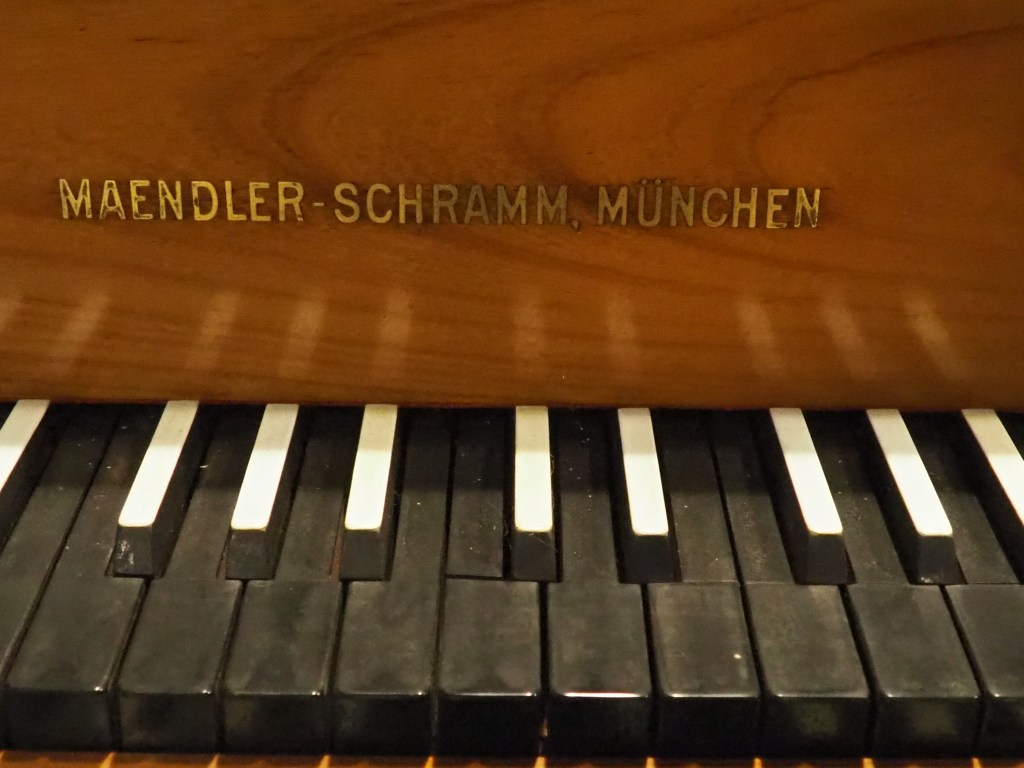
Maendler und Schramm, Monachium Nr 573
Typ : klawesyn
Właściciel : Marek Toporowski
stan: wymaga renowacji,
Karl Maendler (urodzony w 1872 roku w Monachium) zbudował pierwszy klawesyn dla pianistki Elfriede Schunck już w 1907 roku.. Nazwa firmy wynika z faktu, że Maendler poślubił córkę innego fortepianmistrza: M.J.Schramma. Firma zbudowała ponad 600 szpinetów, klawikordów, klawesynów różnego typu. Maendler był urodzonym eksperymentatorem: wynalazł w 1924 roku instrument określany jako Liedharfe, budował również instrumenty we współpracy z Carlem Orffem (specjalny model ksylofonu, do którego budowy wykorzystał drewno różane), eksperymentował z budową „dynamicznego” klawesynu określanego jako „Bach-Klavier”zdolnego do zmiany siły szarpnięcia struny pod wpływem uderzenia dzięki dodatkowej sprężynie zmieniającej odległość skoczka od punktu szarpnięcia. Pierwotnie instrumenty Maendlera posiadały metalową ramę, później konstrukcja została zastąpiona drewnianą masywną kratownicą (tzw. Rastenkonstruktion, Rastenbauweise).
Prezentowany instrument jest typowym modelem flagowego modelu firmy : „klawesynu koncertowego” o dyspozycji uważanej w Niemczech za idealną dla odtwórstwa muzyki Jana Sebastiana Bacha (16’8’ na dolnej klawiaturze, 8’4’ na górnej). Model ten budowany był przez kilkadziesiąt lat (muzeum Dorr posiada podobny instrument z 1938 roku).
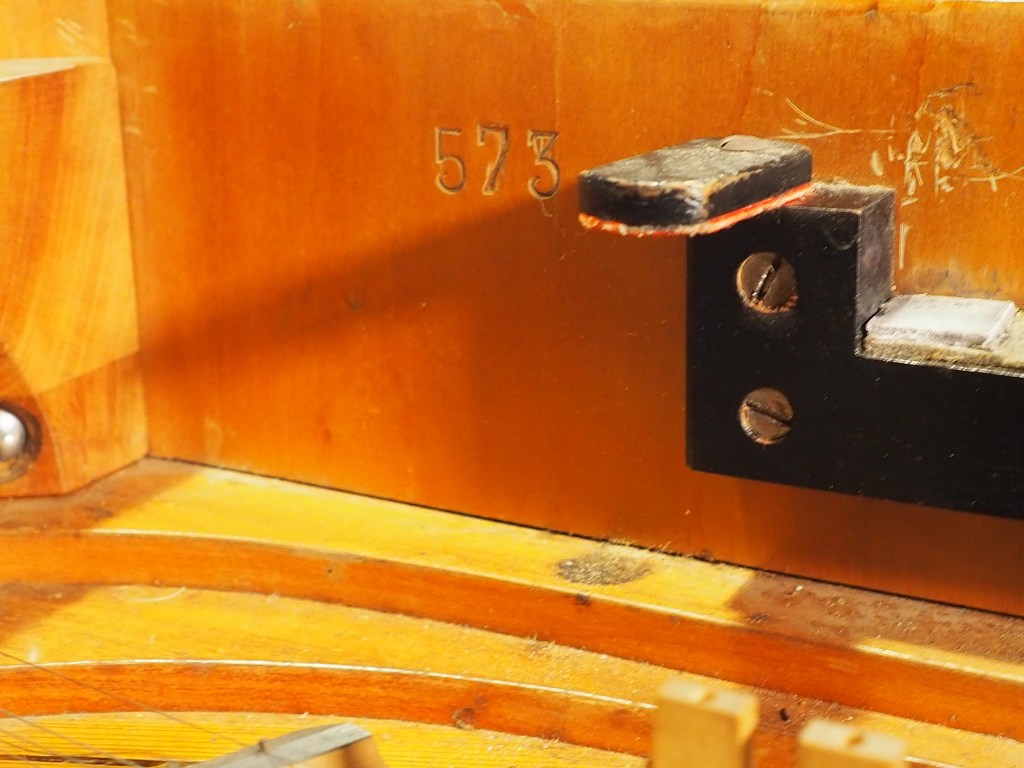
Nr 573 wskazuje, że jest to stosunkowo późny instrument Maendlera (1951-56). Budowniczy w 1956 roku utracił wzrok i był zmuszony wycofać się z profesjonalnej działalności.

Maendler und Schramm, Munich, No. 573
Type: harpsichord
Owner: Marek Toporowski
Condition: requires restoration
Karl Maendler (born in 1872 in Munich) built his first harpsichord for pianist Elfriede Schunck in 1907. The name of the company is related to the fact that Maendler married the daughter of another piano maker: M.J. Schramm. The company built more 600 spinets, clavichords and harpsichord instruments of various types. Maendler was a born experimenter: in 1924, he invented an instrument known as the Liedharfe, he also built instruments in collaboration with Carl Orff (a special model of xylophone, for which he used rosewood), and he experimented with the construction of a ‘dynamic’ harpsichord known as the „Bach -Klavier”, capable of changing the force of the string plucking under the influence of the special feather mounted on the edge of key changing the distance of the jack from the plucking point. Originally, Maendler’s instruments had a metal frame, but later the construction was replaced with a solid wooden truss (known as Rastenkonstruktion or Rastenbauweise).
The instrument presented here is a typical example of the company’s flagship model: a ‘concert harpsichord’ with a disposition considered in Germany to be ideal for performing the music of Johann Sebastian Bach (16’8′ on the lower keyboard, 8’4′ on the upper keyboard). This model was manufactured for several decades (the Dorr Museum has a similar instrument from 1938). No. 573 indicates that this is a relatively late instrument by Maendler (1951–56). The maker lost his sight in 1956 and was forced to retire from professional activity.
 Fortepianarium