
Typ : 2 man. Klawesyn z pedałowym włączaniem rejestrów /
„revival” 2 man. harpsichord with pedals for stop switching
Obudowa: orzech / walnut case
Właściciel / Owner: Marek Toporowski
stan : grający / in playable condition
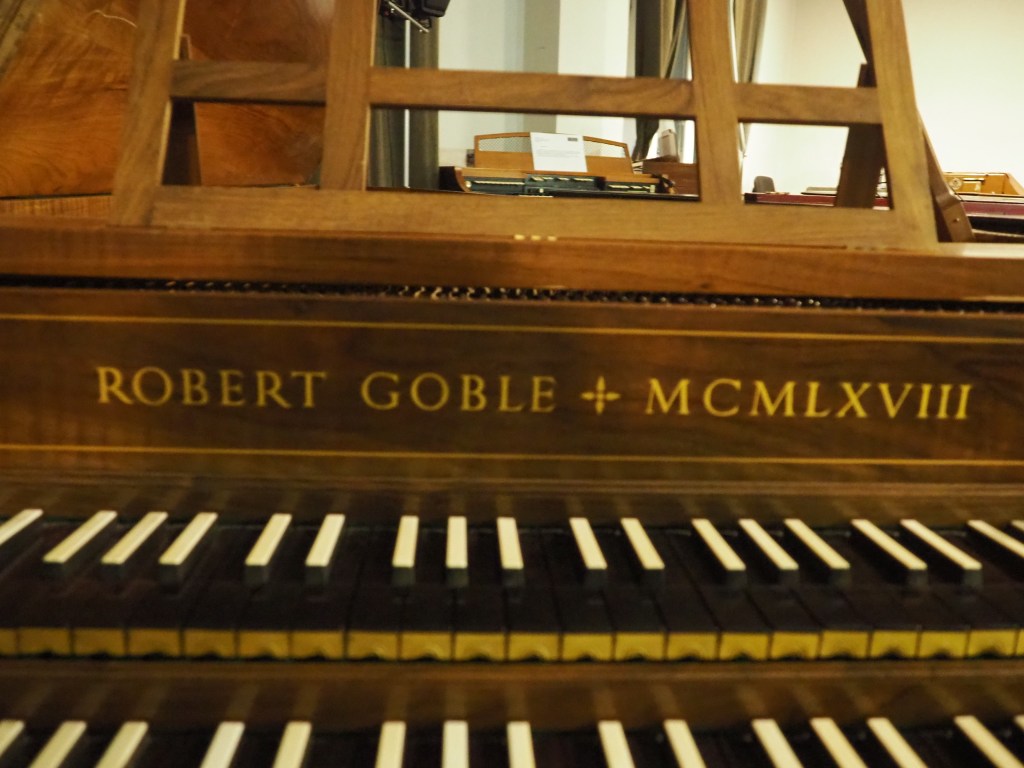
Robert Goble (1903-1991) był jednym z najwybitniejszych budowniczych klawesynów w XX wieku. Na początku działalności Goble budował również flety proste. Do późnych lat 60-tych firma budowała uwspółcześnione klawesyny, później raczej kopie instrumentów historycznych. Estetyka anglosaskich „revival harpsichords” jest jednak znacznie bardziej zainspirowana budownictwem historycznym niż miało to miejsce w wypadku klawesynów Pleyela oraz firm niemieckich.
Niniejszy instrument, zbudowany w 1968 roku, został zakupiony przez Filharmonię Narodową i przez wiele lat był głównym instrumentem tej instytucji. Grała na nim większość znakomitych klawesynistów. Również pierwsza płyta założyciela kolekcji „Fortepianarium” Marka Toporowskiego nagrana została na tym instrumencie.
Zachowane oryginalne skórzane plektra szarpiące struny. Nadmiernie delikatne brzmienie instrumentu jest wynikiem zastosowania, ale i zużycia tego materiału. Rozważana jest konwersja na pióra ptasie.
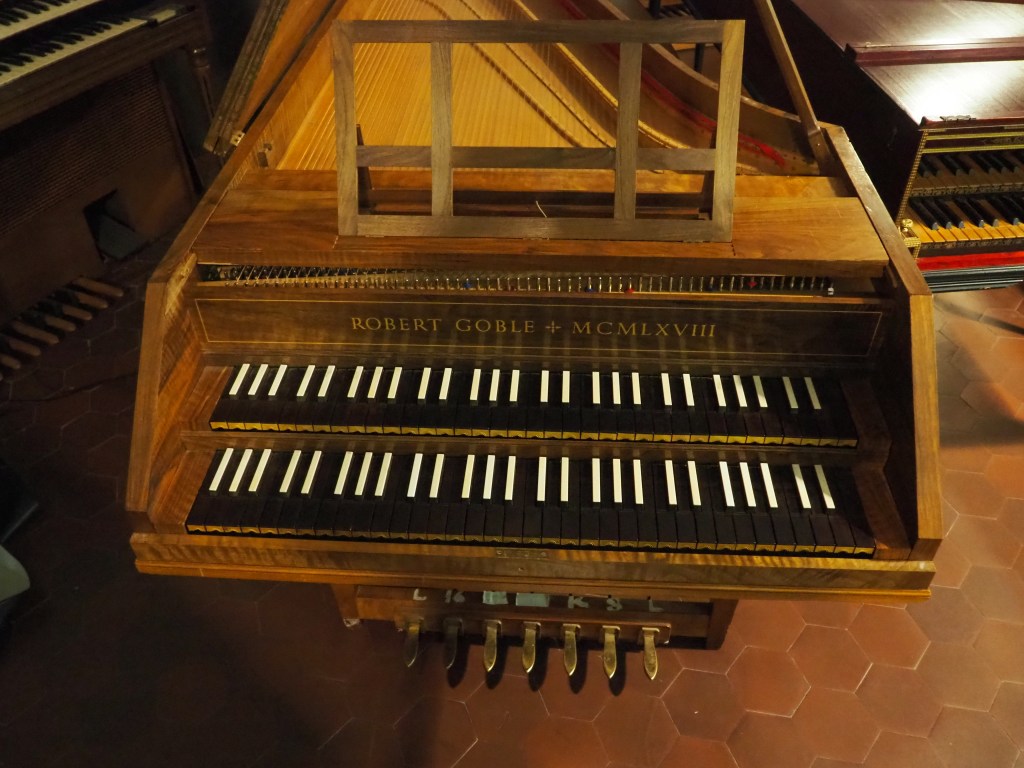
Robert Goble (1903-1991) was one of the most prominent harpsichord builders of the 20th century. In the early days of the business, Goble also built recorders. Until the late 1960s, the company built modernized harpsichords, then rather copies of historical instruments. However, the aesthetics of Anglo-Saxon “revival harpsichords” are much more inspired by historical construction than it was the case with Pleyel harpsichords and German manufacturers such as Sperrhake, Wittmayer or Neupert.
The present instrument was built in 1968 and purchased by the National Philharmonic. For many years it was the main instrument of the institution. Also the first album by the founder of the “Fortepianarium” collection Marek Toporowski was recorded on this very instrument.
The original leather plectra plucking strings have been preserved. The overly delicate sound of the instrument is the result of the use, but also the wear and tear of this material. A conversion to bird feathers is under consideration.

 Fortepianarium